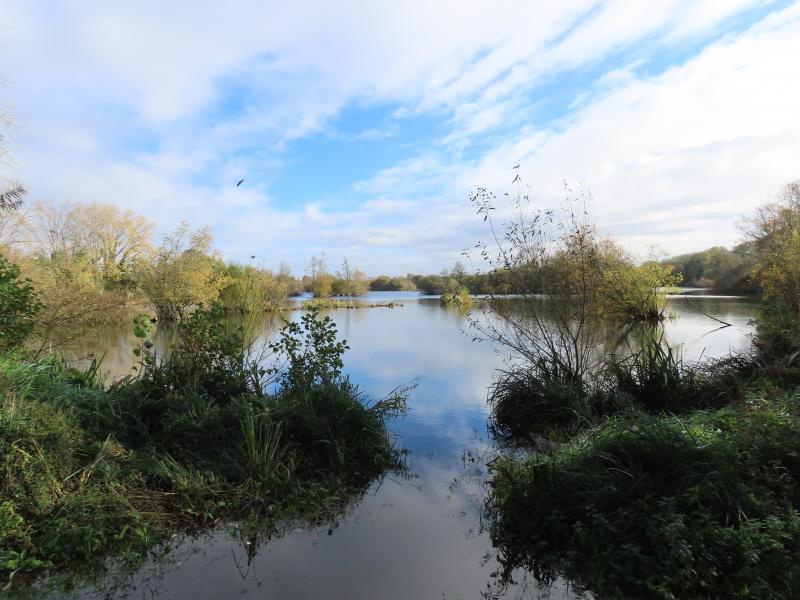


Stocker's Lake
Stocker’s Lake is a flooded gravel pit, just south west of Rickmansworth in Hertfordshire, which was formed following gravel extraction for the construction of the old Wembley Stadium. Being only a ten-minute walk from home, this has been my local patch for many years.
Local birds at Stocker's Lake
Stocker’s Lake is a great place to see Kingfishers, which can be found along the River Colne, around the shores of the main lake, or along the adjacent canal. Smews are delightful little ducks which can be found here in most winters, but their appearance has become less reliable in recent years.
The thick cover around the lake provides one of Hertfordshire’s main strongholds for Cetti’s Warblers, whose explosive songs are heard far more often than the birds are seen.
Birds of prey are represented by the now-ubiquitous Red Kites and Buzzards. Kestrels, Sparrowhawks and Hobbies also appear regularly, while Peregrines and Marsh Harriers are occasionally seen.
Stocker’s Lake is home to a heronry, in which the regular Grey Herons have been joined by breeding Little Egrets following their rapid colonisation of the UK.
A number of exotic species can easily be seen here, including Egyptian Geese and Ring-necked Parakeets. Red-crested Pochards are frequent visitors, especially on the north side of the lake near the River Colne.
Special birds at Stocker's Lake
Rarer visitors during my time living nearby have included a popular Little Bittern by the river and a short-staying Night Heron. A singing Marsh Warbler in 2020 was a personal highlight, which I found during a morning COVID lockdown walk. Ospreys occasionally pop in for a spot of fishing during migration.
When to visit Stocker's Lake
Spring visits will provide the widest variety of species, as warblers take up territory. Garden Warbler in particular can be easy to find in early May. The heronry will be in full swing and the recently-established Black-headed Gull colony provides a raucous atmosphere.
Summer is quieter, but breeding birds can be seen with patience. Common Terns nest on floating islands and ward off the attentions of gulls. The reedbeds hold several pairs of Reed Warblers, with Sedge Warblers preferring shrubs around the edges. Hobbies are often seen over the lake chasing dragonflies and swallows.
Autumn sees a gradual change as summer visitors depart and wintering wildfowl reappear.
Winter brings a fluctuating number and variety of wildfowl. Shoveler, Gadwall and Goldeneye are particularly well-represented, while the appearance of Goosander and Smew is more sporadic. The alders around the lake’s islands and shores usually host a Siskin flock, which sometimes includes a few Redpolls.
Nearby Birding Destinations
Just across the canal is Stocker’s Farm, which is well worth checking for migrant waders in spring if the field is flooded. Little Ringed Plover is the most regular migrant, but Greenshank, Common Sandpiper, Green Sandpiper and Ruff are among species which have recently been seen. Yellow Wagtails also drop in at this time of year.
Further afield, Staines Reservoir is around fifteen miles to the south, while the nearest Hertfordshire ‘hotspots’ are Wilstone and Startops Reservoirs near Tring, about thirty minutes’ drive to the north.
How to get there
Stocker’s Lake is easily reached by public transport, as the underground station is only a ten minute walk from Rickmansworth Aquadrome. Stocker’s is the third in a row of lakes, beyond Batchworth and Bury Lakes.
By car, Rickmansworth is between junctions 17 and 18 on the M25. Follow the signs to the Aquadrome and then walk west to the lake. Or just walk from my house.